
Our resources
Sustainable sourcing
Sustainable raw materials, short supply chains, recyclability… we manufacture our products using the resources that the planet can sustainably provide. At Schmidt Groupe, we never choose our resources based exclusively on technical grounds. This philosophy dovetails with our commitment towards the planet, our customers and future generations.
Our responsibility is ensuring that our resources come from sustainable sources, are used sparingly, can be recycled at the end of their life, and will still be available in the future.
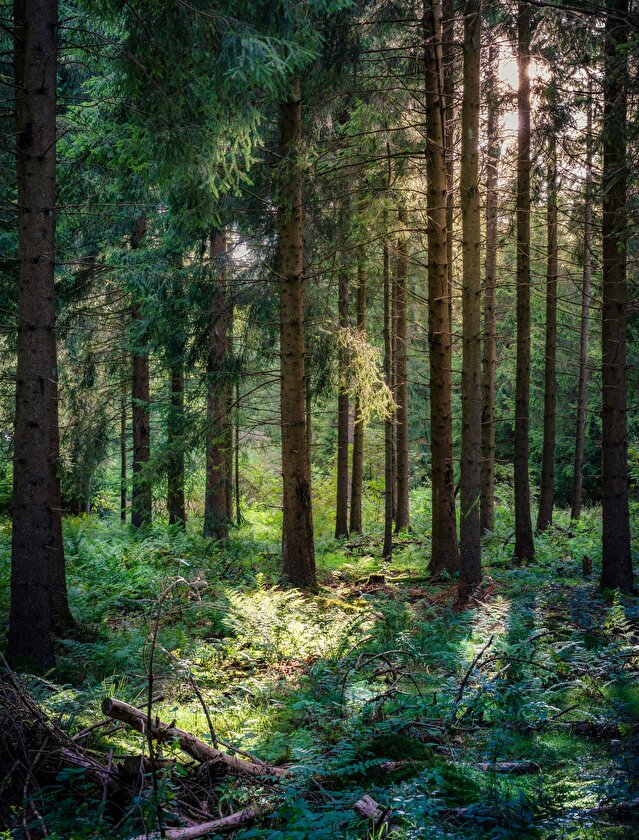
Prioritising wood from sustainably managed forests
Wood is our main raw material. It is a living, renewable resource, but it will end up being depleted unless care is taken to protect it.
84% of our wood is PEFC-certified, which guarantees that it comes from sustainably managed forests. This certification extends far beyond the actual resource, since it requires traceability throughout the supply chain, from the forest to our workshops.
Since 2021, we have been working closely alongside WWF France. We draw on their expertise to critically examine our wood sourcing policy and strengthen our actions to preserve biodiversity.
Our goal is to source all our wood from sustainably managed forests by 2030.
Promoting short supply chains
95% of the raw materials and components used in our manufacturing processes come from the European Union. One in four of our suppliers is based in our home region of Alsace.
This policy of procuring our resources from local suppliers is key to curbing transport-related carbon emissions, as well as building enduring and balanced relationships with our partners and driving local economic development.
Applying the 4Rs of eco-design
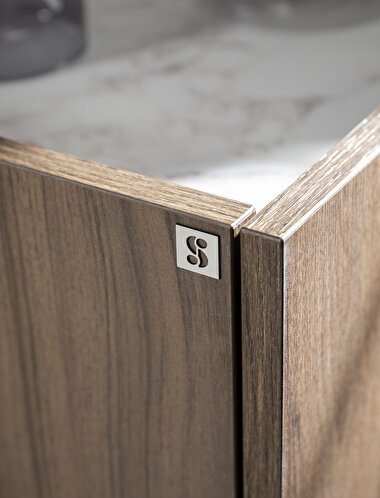
Eco-design starts from the earliest stages of the product design cycle, continues during the decision-making process at the ideation stage, and extends throughout the product’s lifecycle. Our goal is to ensure that all our products are eco-designed by 2030.
Our approach is based on the 4Rs principle:
- Reduce: design the product while optimising the amount of materials used (such as by minimising the amount of offcuts)
- Repair: design products that can be repaired by the customer
- Reuse: embrace the circular economy and give products a second lease of life
- Recycle: dispose of end-of-line products using the appropriate treatment methods
Reducing our offcuts
By using an algorithm to improve the cut layouts for each panel, we have driven down our wood waste rate from 16.92% in 2017 to 15.30% in 2024, representing a saving of 495 tons of CO2.

Eliminating problem materials
We completely eliminated PVC from our products over 20 years ago. PVC may be inexpensive, but it is not sustainable.
We have also replaced traditional lacquers with water-based lacquers, lowering emissions of volatile organic compounds (VOCs) from 55% to 5%.
The use of MDF panels, which are made from pressure-bonded wood, is gradually being phased out in favour of solid wood in line with a move towards more natural and sustainable materials.


Redesigning our packaging
All the cardboard boxes that we use are fully recyclable. We have completely removed polystyrene from our packaging, and we are trialling bio-based materials as a replacement for plastic film.
Our Start range is delivered in reusable crates. The units arrive fully assembled in crates, which are then collected, returned to us and reused, which significantly reduces the amount of disposable cardboard and plastic used.

Harnessing green energy
Energy is our fourth-largest expense item after wood, metal and cardboard / plastic. Energy is also a strategic priority for guaranteeing our self-sufficiency and resilience.
Since 2025, all energy purchased (gas and electricity) has come from green sources in France.
This decision is part of our commitment to shrinking our carbon footprint. But buying green energy is not enough. We also generate some of our own energy through various investments at our sites.

Recycling and recovering
We have set up recycling and recovery schemes for all our production waste:
- Boiler ash is turned into concrete blocks
- High-density particle boards are reused as sofa frames or protective panels
- Sawdust is used as fuel
- Glassine paper is recycled as insulation
- Aluminium is recycled directly by our suppliers
True to our continual improvement culture and circular economy principles, we regularly carry out tests to ensure that our waste is recovered as effectively as possible.