
Excellence in motion
Drive continual improvement
Continual improvement forms the bedrock of our industrial culture and is based on the following two focus areas:
Daily improvements, which are suggested and constantly put into practice by our operations teams.
Disruptive investments, which transform our production capabilities.
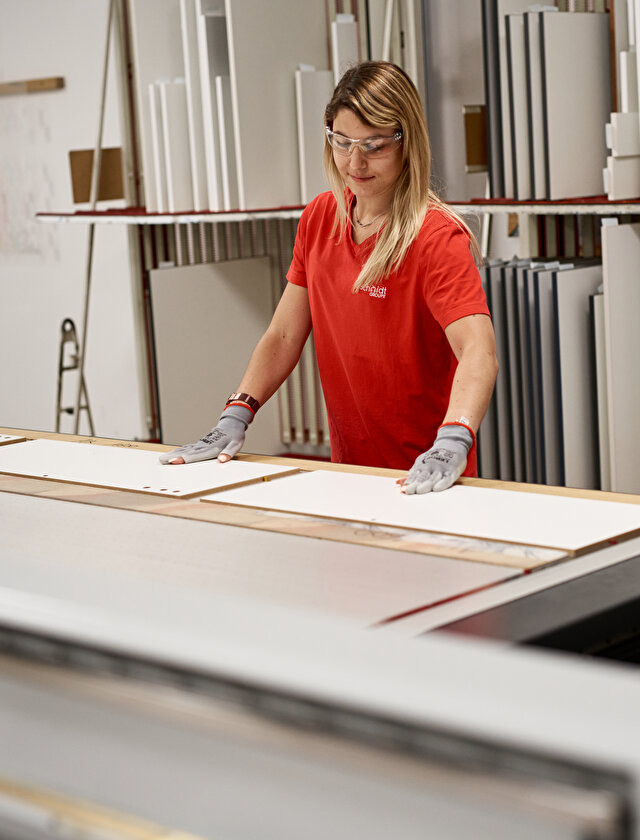
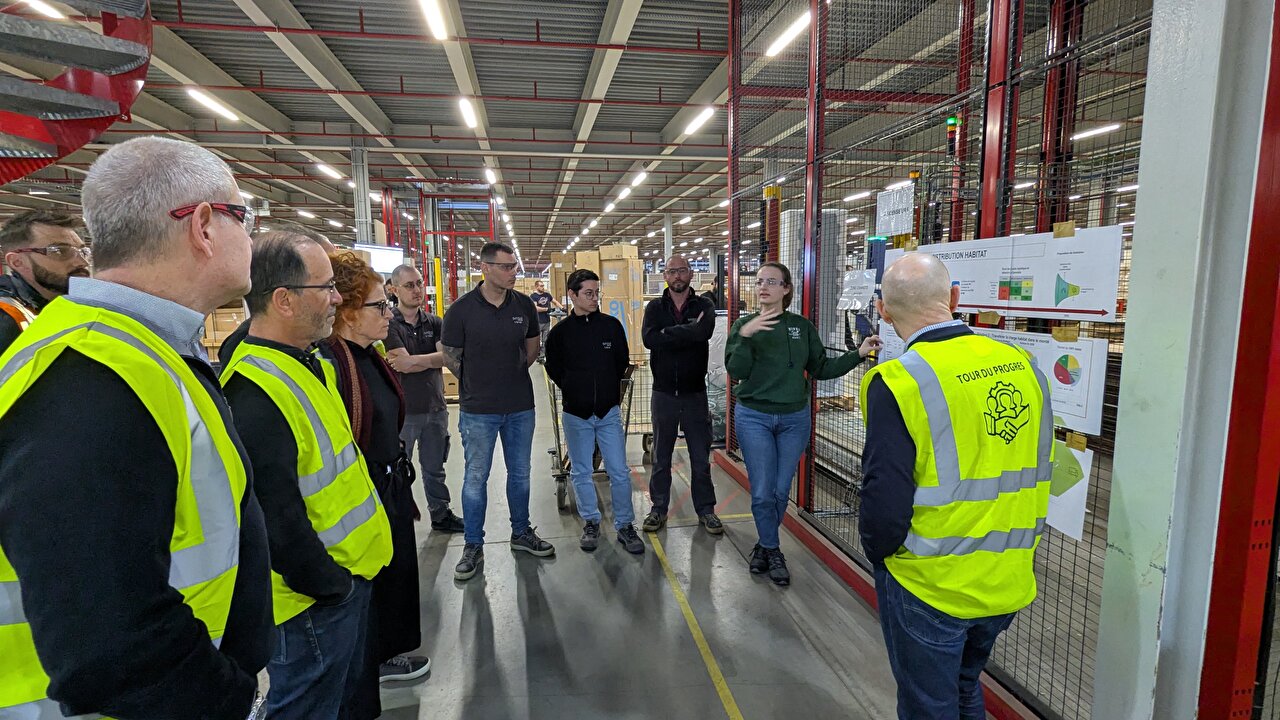
Achieving progress every day
Continual improvement projects are carried out across all our sites and services.
Every year, nearly 300 projects are performed, generating measurable gains in terms of making financial savings, reducing our carbon footprint, improving safety and ergonomics, and lowering energy use.
These projects are not restricted to our production activities. All the company’s divisions are fully engaged in this process.
Some projects save the Group several hundred thousand euros, while others might only save a few hundred, but they all create value, since they follow the same continual improvement strategy, namely identify a problem, report it, propose corrective actions, implement them, and measure the results… and then start all over again.
At Schmidt Groupe, we have a habit of saying “Great, a problem!”, because a problem is an opportunity to improve.
Progress Stars
This is the name of our in-house recognition scheme that rewards both major achievements and small-scale initiatives spearheaded by individual employees.
The 2025 edition, which marked the programme’s 20th anniversary, was a record-breaking year with more than 320 continual improvement projects led by teams in all the Group’s divisions. In all, the initiatives throughout the year generated:
- €10.5 million in savings
- 2,736 tons of CO2 avoided
- 10,000 improvement actions implemented to reduce risks and enhance occupational health and safety
These figures obviously paint a clear overall picture, but it is worth remembering all the countless ideas behind the scenes that are brought to life, all the everyday irritants that are turned into solutions, and the small, repeated steps that help build sustainable performance.


Investing to transform the Group

Disruptive investments bring about structural changes to our capabilities. The U3B project illustrates this approach by switching off the production lines to lower electricity use, integrating autonomous vehicles to streamline workflows, and pushing ahead with the widespread deployment of robotics to improve productivity and ergonomics. These projects call for significant investments, but they permanently redefine our performance standards.
This continual improvement culture is based on the conviction that an identified problem is an opportunity for improvement. We never try to hide any malfunctions. Instead, we document, analyse and resolve them.
